27 min read / Issue 04 · April 2026 / Print or save as PDF / Share by email
01
The Climate Desk · Investor Synthesis

Mitigation and adaptation, working as one: an investor's view of Himachal Pradesh.

Himachal Pradesh holds a quarter of India's hydropower potential, two-thirds of its land under recorded forest cover, and the headwaters of five river systems that feed the Indus and Ganga basins, India's grain belt and Pakistan's irrigation. The state's climate exposure is therefore not a state issue. It is a national one. This brief argues that the only investable response is restoration capital deployed for mitigation and adaptation in the same instrument.

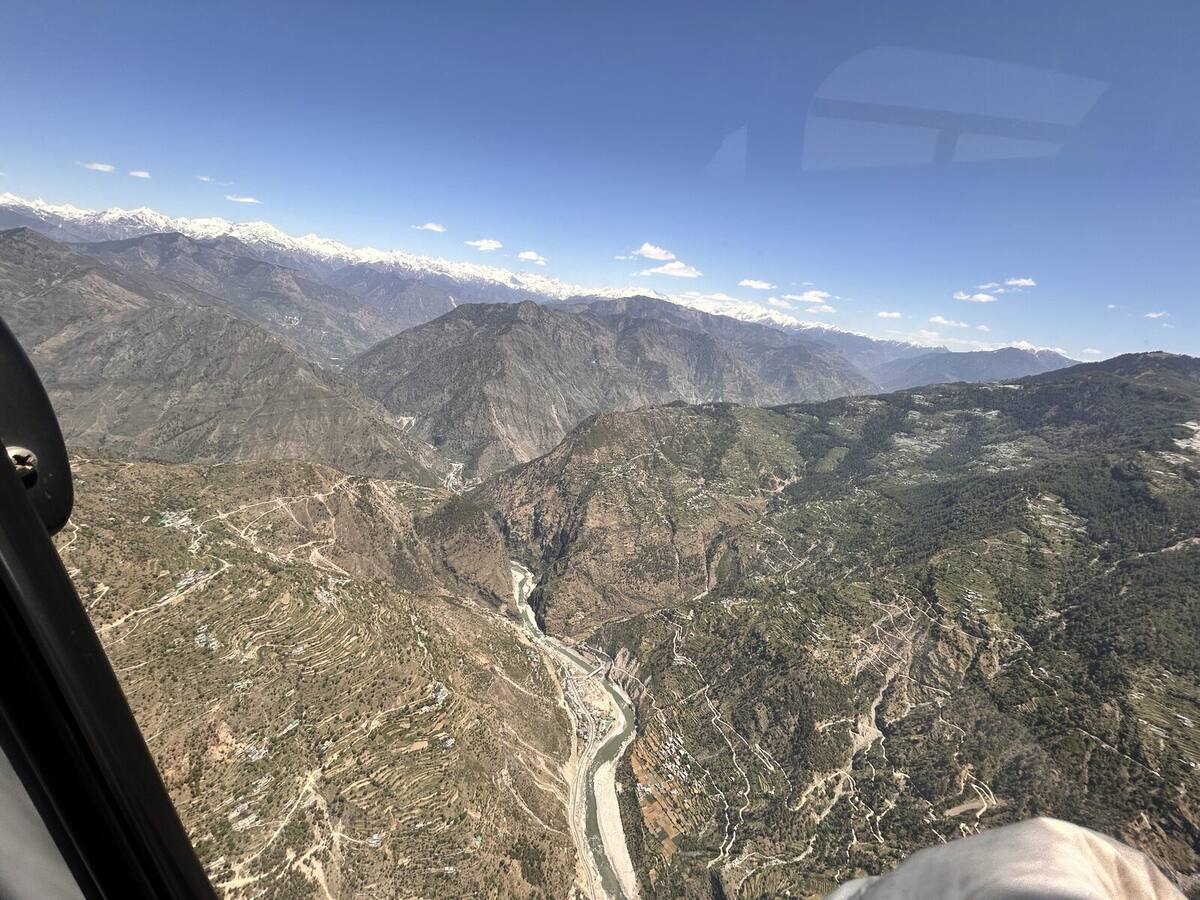
Aerial view of the Sutlej basin in Himachal Pradesh
Aerial / The Sutlej basin, Himachal Pradesh - deforestation clearly evident on aerial survey / Author photography, April 2026
Population
75.5 lakh
0.53% of India, 2025 projection
Forest cover
15,434 sq km
27.7% of state, FSI 2023
Hydro potential
27,436 MW
around 25% of India total
Forest carbon stock
925 Mt CO2e
FSI ISFR 2023
Executive Summary

The state cannot fix this. Capital can.

Himachal Pradesh carries India's grid, grain belt and treaty obligations on 1.69% of its land. Its political weight cannot rebuild what the monsoon now takes apart each year. A restoration asset class, priced in carbon and paid for downstream, is the only instrument that matches the geography.

01 · The asset

One state, a quarter of the country's hydropower.

1.69% of India's land. 0.53% of its people. ~25% of national hydro potential, 925 Mt of forest carbon stock, and the headwaters of five river systems feeding the Indus and Ganga basins.

Reprice as national infrastructure
02 · The signal

It is not warming. It is variance.

April rainfall at Manali swung from 36 mm (2022) to 280 mm (2021). 2023 monsoon losses: Rs 12,000 crore, 428 fatalities. The Supreme Court has warned of HP "vanishing from the map."

Underwrite recurrence, not averages
03 · The instrument

One project. Two yields.

A single restoration unit sequesters carbon for global mitigation buyers and protects the highway, orchard and basin immediately downstream. Verra, Gold Standard and CCTS rails exist. The Western Himalaya aggregator does not.

Build the aggregator
04 · The political ceiling

4 of 543 seats. The Centre will not pay this bill.

HP's PDNA assessment claimed Rs 9,000 crore for the 2023 disaster. Eventual release: Rs 2,000 crore. The state cannot lobby this gap shut. Restoration capital structured for dual yield is the only instrument that prices the geography correctly.

Substitute capital for transfers
05 · The downstream

The beneficiary class is national, and transboundary.

Punjab's 76 lakh ha of cropped area. Rajasthan's 16.17 lakh ha on the Indira Gandhi Canal. Haryana and Delhi's drinking water. J&K's Chenab corridor. Pakistan's IWT 1960 allocation. India's NDC pathway. All route through this catchment. Restoration capital deployed in HP is the cheapest unit of NDC delivery and water security available to multilateral and sovereign balance sheets.

The cheapest NDC unit on the table
8 steps
If you read nothing else, read this
See full playbook with sourcing ↓
Part I · The Endowment

What Himachal holds, in one ledger

A state that occupies 1.69 percent of India's land area, holds 0.53 percent of its population, and underwrites a disproportionate share of its water, power and ecological security. Read the asymmetry first. Everything else follows.

Hydropower
Identified potential of 27,436 MW across the Sutlej, Beas, Ravi, Chenab and Yamuna basins. Of this, 24,000 MW is harnessable. The state has commissioned 10,519 MW so far, with another 10,393 MW allotted to public and private developers. Largest single station is Nathpa Jhakri at 1,500 MW.
25%
approx of India's hydro potential
Forests
Forest cover of 15,434 sq km (27.7% of geographical area), within a recorded forest area of 37,033 sq km (66.5% of state). Carbon stock estimated at 252 Mt (925 Mt CO2 equivalent), 3.54% of India's total forest carbon. Five National Parks, 28 Wildlife Sanctuaries, three Conservation Reserves.
925 Mt
CO2e in forest carbon stock
Water
Headwaters of five river systems: Sutlej, Beas, Ravi and Chenab feeding the Indus basin; Yamuna feeding the Ganga basin. Together they drain 53,311 sq km of HP's 55,673 sq km area. The Sutlej basin alone feeds Bhakra, Pong and the Indira Gandhi Canal, irrigating over 16 lakh hectares in Rajasthan and supplying drinking water to multiple cities. Snow and glacier contribute roughly 40% of basin runoff. Sutlej basin held 1,048 glacial lakes in 2023, up from 562 in 2019.
40%
of Sutlej runoff from snow/glacier
Pharma cluster
The Baddi-Barotiwala-Nalagarh (BBN) belt is one of Asia's largest pharmaceutical manufacturing hubs, supplying a substantial share of India's formulation exports. Located on the southwestern plain, dependent on grid power, water and uninterrupted road logistics through hill terrain.
35%
of Asia's pharma capacity in BBN
Tourism economy
Tourism contributes 7-7.5% of GSDP and supports more than 300,000 direct livelihoods. Annual tourist arrivals crossed 1.80 crore in 2024. The economy splits between summer alpine tourism (Manali, Kullu, Lahaul-Spiti, Kinnaur) and winter snow tourism (Solang, Auli equivalents, ski circuits).
1.80 cr
tourist arrivals, 2024
GSDP
FY26 GSDP at current prices estimated at Rs 2.55 trillion (USD 30 billion), with a five-year CAGR of 8.36% per IBEF. Per-capita income above the national average. Hydropower royalties, tourism receipts, pharma exports and apple horticulture are the four largest contributors after services.
Rs 2.55T
GSDP FY26 estimate

Why the state cannot lobby its way out

A state that holds outsized ecological responsibility holds undersized political weight. Census 2011 baseline; 2025 NCP projection.

Population
0.53%
of India's population, 2025 projection (75.55 lakh of 142.86 cr)
Lok Sabha
4 / 543
0.74% of seats. Mandi, Hamirpur, Kangra, Shimla.
Rajya Sabha
3 / 245
1.22% of seats in the upper house
Land area
1.69%
of India's geographical area, 55,673 sq km
Part III · The Evidence

What is changing, and at what speed

Six measured indicators. None are model projections. All are observed data from primary sources between 2021 and 2025.

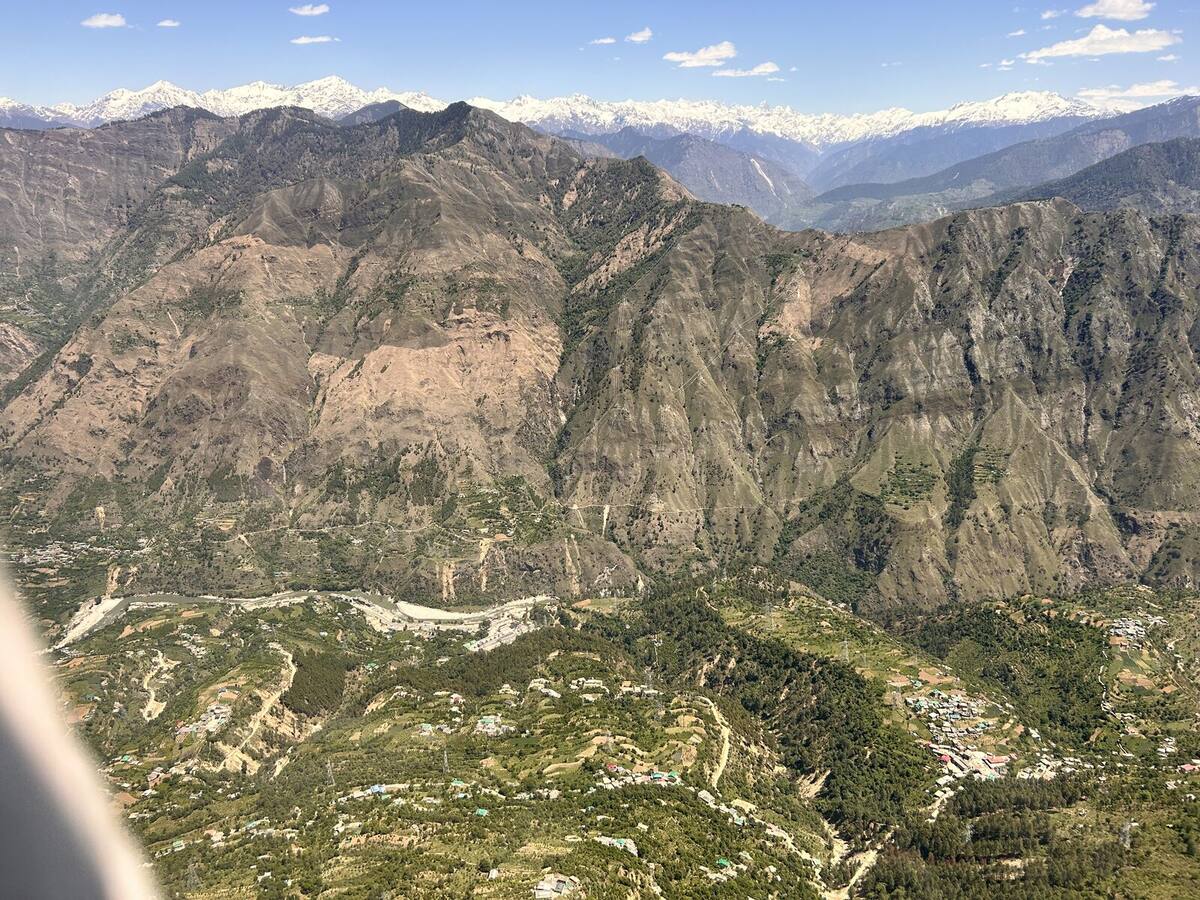
Brown denuded slopes against snow-capped peaks in Himachal Pradesh
Lower slopes browning by April, while the high Himalaya retains some snow cover. The compositional shift is visible in single-season recce. / Author photography, April 2026

A 30°C thermal range, in a single state, on a single day

On April 5, 2026, the IMD Meteorological Centre Shimla recorded a 30°C thermal range across HP stations on a single day: Tabo at 0.2°C (lowest), Keylong receiving 20 cm of fresh snow, while Una recorded 30.6°C. The state's intra-district thermal range has widened, not just shifted. Asset planning that uses single-district averages or state-level temperature aggregates is now structurally wrong.

The signal is rainfall, not temperature

The IMD Shimla long-term station record for Manali (2010 to 2025) shows no clean temperature trend. April highs have ranged from 22.0°C (2011) to 29.2°C (2010), with no monotonic warming. Rainfall is where the anomaly lives. Over the same 16 years, Manali's April rainfall has swung from 36 mm (2022) to 280 mm (2021). That is a factor of nearly eight, in the same month, at the same station. April 2024 alone delivered 82 mm in a single 24-hour event on the 30th. April 2018 saw 35.4 mm in 24 hours on the 11th.

A single-day cloudburst of that magnitude in shoulder season is what destabilises slopes already loosened by the previous monsoon. It is the operational variable that apple growers, hydro engineers, road contractors and trekking outfits cannot price. What is changing is not the average. It is the distribution.

Chart 01 · Monsoon disaster losses, Himachal Pradesh

The 2023 break point

Annual loss in Rs crore
2021 to 2025 monsoon-season losses reported by HP State Emergency Operation Centre. The 2023 figure is the official Chief Minister's assessment to the Centre, against which the NDMA Post-Disaster Needs Assessment validated a Rs 9,000 crore claim. The Centre eventually released Rs 2,000 crore.
Annual fatalities
428 deaths in 2023 monsoon, the highest in the state's recorded history. 174 in 2024, more than 320 in 2025. The Supreme Court warned in 2025 that on the current trajectory the state risks "vanishing in thin air from the map of the country."
Source: HP State Emergency Operation Centre, Department of Revenue. NDMA Post-Disaster Needs Assessment 2023. Supreme Court of India observations, reported in Down to Earth, August 2025. April rainfall extremes from IMD Meteorological Centre Shimla.
Chart 02 · Cryosphere indicators, Sutlej basin

The water column is destabilising

Glacial lakes, Sutlej basin
From 562 lakes in 2019 to 1,048 lakes in 2023, an 86 percent rise in four years. Each lake is a potential GLOF risk. ISRO's National Remote Sensing Centre uses Sentinel-2 imagery to track this on an annual cycle.
Snow persistence anomaly, HKH
ICIMOD's 2024-25 snow update showed Hindu Kush Himalaya snow persistence at a 23-year low, 23.6% below the long-term normal. The Western Himalaya including Himachal recorded particularly steep declines.
Source: ISRO NRSC Sentinel-2 lake inventory 2019, 2023. ICIMOD Hindu Kush Himalaya Snow Update 2025.
Part IV · The Investor Map

Sector exposure, by physical risk

Nine HP sectors mapped against their direct exposure to climate variability and their potential as restoration-investable themes. Read both columns together.

Sector
Why it is exposed, why it is investable
Risk tier
Restoration angle
Hydropower
10,519 MW operational, with around 10,400 MW pipeline. Sediment loading from upstream landslides cuts turbine life. GLOF events damage intake structures. Yet hydro itself is the single largest mitigation asset India has in this geography.
High
Catchment restoration as insurance for installed capacity.
Apple horticulture
India's apple economy is concentrated in Shimla, Kinnaur, Kullu and Mandi. Chilling-hour requirements (around 1,200 hours below 7°C) are eroding at lower altitudes. The economic frontier is migrating uphill, with stranded asset risk in old orchards.
Critical
SALM agroforestry credits stack on existing apple income.
Pharma (BBN cluster)
Baddi-Barotiwala-Nalagarh sits on the Shivalik foothills. Logistics depend on NH-1 and the Kalka-Shimla corridor. Water security is the under-priced risk; both are being squeezed by upstream basin variability.
Moderate
Indirect via watershed protection upstream.
Tourism (alpine)
7-7.5% of GSDP. 1.80 cr arrivals in 2024. Concentrated risk: 70% of tourism revenue is linked to a 4-month seasonal window. Snow tourism revenues are already declining at established stations.
High
Year-round adventure economy via trail and biodiversity restoration.
Tea (Kangra)
GI-tagged Kangra tea is grown in a narrow valley at 900-1400m altitude. Highly sensitive to monsoon timing and intensity. Repeated 150% above-normal monsoons have damaged plantations.
High
SALM credits + soil moisture management.
Sea buckthorn
Grown across Lahaul-Spiti and Kinnaur. Hardy crop with rising nutraceutical export demand. One of few crops naturally suited to projected climate envelope shifts.
Beneficiary
Direct adaptation crop with international market.
Real estate (hill towns)
Shimla, Manali, Dharamshala. Slope failure risk has rendered parts of inventory uninsurable. 2023 monsoon: 9,600+ houses damaged. Building byelaws under review.
Critical
Slope reforestation as direct property-value protection.
Highway infrastructure
Kiratpur-Manali NH, Kalka-Shimla corridor, Mandi-Kullu stretch. 1,000+ road closures during 2023 monsoon. Repair costs are recurring on the same kilometres.
Critical
Slope stability via afforestation along the corridor.
Forest carbon (latent)
925 Mt CO2e in forest carbon stock. Currently uncompensated. Under India's Carbon Credit Trading Scheme (CCTS), compliance and offset markets create monetisation pathways.
Strategic
The pure mitigation play, with adaptation co-benefits.

Underlying research, by sector

The Climate Desk has produced four prior interactive reports on Himachal Pradesh's crop economy, hill-town vulnerability, and disaster sequencing. Each is referenced inline below. They form the analytic substrate for this synthesis.

Six clips from the same April week

All six clips below were filmed during the same April 2026 window when Una recorded 30.6°C, Tabo dropped to 0.2°C, and Keylong took 20 cm of fresh snow at 3,000 m AMSL. The 30°C single-day thermal range across HP stations, in moving image. Aerials from Kullu, an apple orchard mid-bloom under hail-net, the cold-desert Lahaul valley, and the Keylong snowfall on the Manali-Leh corridor. The visual evidence base for everything argued above.

01 · Aerial pass, Kullu valley orchard belt and Beas river meander. The terraced apple economy in one frame.
02 · Apple orchard mid-bloom, hail-net deployed overhead. Sparse blossom set on bare wood, the field signature of a warming chill window.
03 · Lahaul valley under late-season snow and a low ceiling. The cold desert that stores the water the plains drink.
04 · Fresh snowfall at Keylong, 3,000 m AMSL. Lahaul valley, the same April window when Una hit 30.6°C.
05 · Keylong settlement under accumulating snow on the Manali-Leh corridor.
06 · Keylong snowpack — the water-storage cycle that the plains downstream depend on. / All clips: author footage, April 2026.
Part V · The Energy Paradox
India's hydropower capital, importing power
A state that produces a quarter of India's hydropower potential draws electricity from the national grid at peak. A state with India's cleanest power-mix has fewer than 5,000 EVs registered.
Read
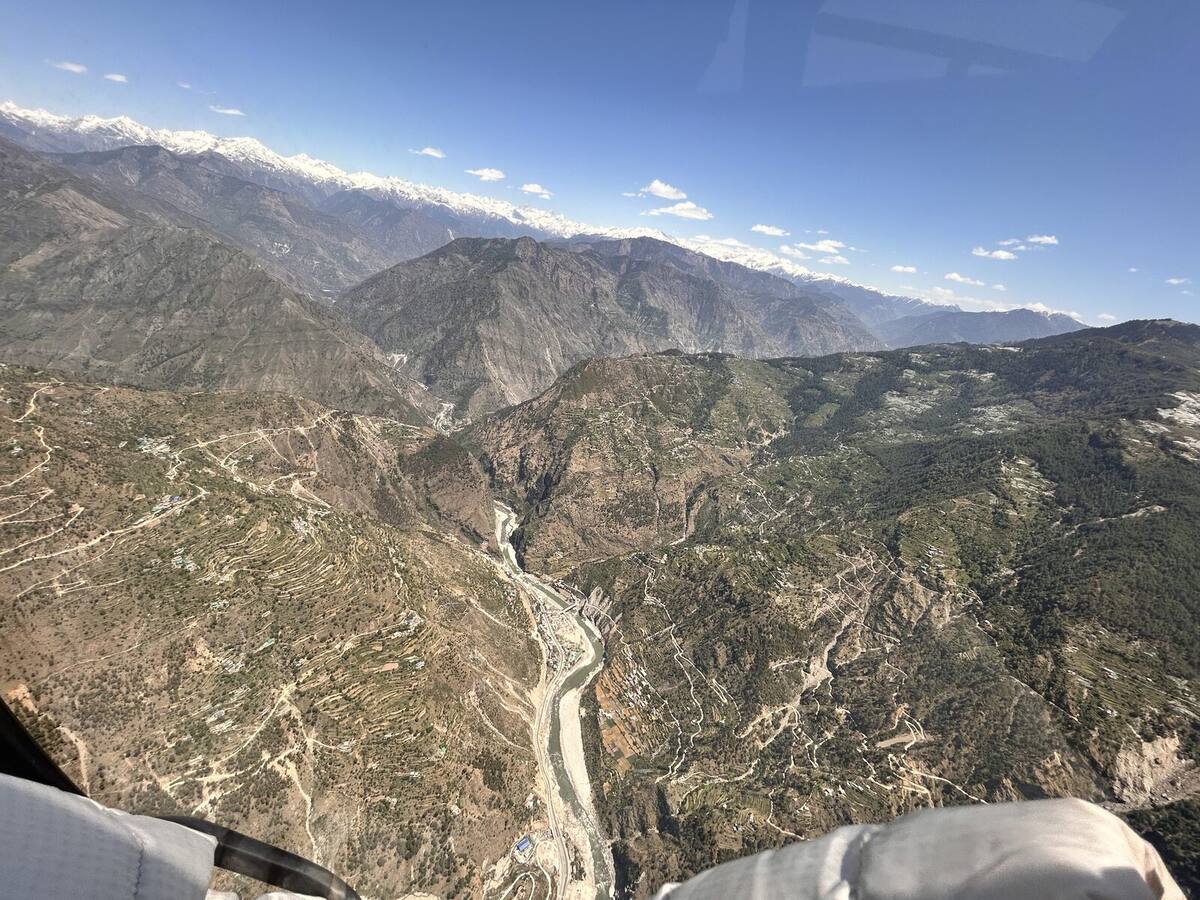
Sutlej river with hydropower infrastructure visible in the valley floor
Hydropower infrastructure on the valley floor of the Sutlej basin. The state hosts 10,519 MW of installed hydro capacity. / Author photography, April 2026
The Generation
10,519 MW
Installed hydro capacity in HP, with another 10,393 MW already allotted to public and private developers and the remaining 3,481 MW set aside for ecological reasons. The bulk of generation flows to the northern grid serving Punjab, Haryana, Delhi and Uttar Pradesh, not to Himachal itself. The state earns royalty in the form of free power (typically 12% of generation) plus cess revenue.
The Consumption
11,354 GWh
HP electricity consumption FY24 per CEA. The state's contracted capacity stood at 2,381 MW as of March 2024, of which 93.3 percent is non-fossil. Despite owning a quarter of India's hydropower potential, in winter months when river flows fall, HP draws net power from the grid rather than supplying it. Energy security is therefore a function of grid integration, not raw generation capacity.

The EV gap is structural, not behavioural

As of April 2025, Himachal Pradesh had registered 4,997 electric vehicles, against an EV Policy target of 100% EV sales by 2030 and 15% BEV new registrations by 2025. Roughly 402 charging stations are sanctioned across the state. The Himachal Road Transport Corporation has ordered 297 e-buses from a domestic supplier worth approximately Rs 424 crore.

The gap is geographical, not aspirational. Charging infrastructure cannot be retrofitted on switchback hill roads using plains templates. Range anxiety on Manali-Leh, Shimla-Kinnaur or Mandi-Lahaul stretches is a real engineering problem, not a marketing one. The result: a state with the cleanest indigenous power-mix runs on petrol and diesel for road transport, while electricity from its own rivers powers EVs in Delhi and Bengaluru.

The captive green-power opportunity
Why this is investable
at scale
Captive renewable PPAs into Himachal-anchored industries (pharma, EV charging clusters, data centres in Una/Solan) have unique structural appeal: a generation source that is hyper-local, dispatch-flexible, and certifiably non-fossil. The state government's open-access policy already permits third-party sale of small-hydro power. The market is missing aggregators, not supply.
EVs registered
4,997
As of April 2025 across the state
Charging stations
402
Sanctioned across HP under the EV Policy
Non-fossil contracted
93.3%
Of state's contracted capacity, March 2024
Hydro headroom
3,481 MW
Forgone potential, kept aside for ecological reasons
Part VI · The UNFCCC Frame

Mitigation and adaptation, in the same instrument

Four restoration pathways. Each has an internationally recognised methodology under Verra, Gold Standard or India's CCTS. Each generates carbon revenue while protecting a physical asset already in HP's economic base.

This is the section where the report's central thesis lives. A hectare of restored mid-altitude forest sequesters 2-5 tonnes CO2e per year (mitigation). The same hectare reduces slope failure on the highway corridor below, holds soil moisture for the orchard adjacent, and slows runoff into the GLOF-vulnerable basin downstream (adaptation). Mitigation and adaptation in the same instrument. The accounting frameworks already exist. The capital aggregation does not.

ARR
Afforestation, Reforestation, Revegetation
Methodology
Verra VM0047, GS-LUF
Credit price
USD 15-30/tCO2e
50,000 to 100,000 hectare portfolio realistic across landslide-scarred slopes in Kullu, Mandi, Chamba and Shimla. Mitigation via biomass carbon, adaptation via slope stabilisation and soil retention. Strong fit with native broadleaf species.
AFOLU
Agriculture, Forestry, Other Land Use (bundled)
Methodology
Verra VCS multi-activity
Credit price
USD 15-30/tCO2e
Combines ARR, improved forest management and agroforestry in a single project structure. Applicable across all 12 HP districts, particularly Kangra, Mandi and Shimla integrated landscapes. Higher transaction complexity, higher per-hectare revenue.
Wetlands
High-altitude wetland and bog restoration
Methodology
Verra VM0033, VM0036
Credit price
USD 25-45/tCO2e
Pong, Renuka, Khajjiar, Chandratal plus hundreds of smaller alpine lakes and bogs. Premium credit pricing because wetland sequestration rates are high and methodologies are conservative. Direct GLOF buffering across the 1,048-lake Sutlej basin.
SALM
Sustainable Agricultural Land Management
Methodology
Verra VM0042, VM0017
Credit price
USD 10-25/tCO2e
Applies to 200,000+ hectare addressable base across apple, vegetable, Kangra tea, hemp and aromatic belts. Mitigation via soil organic carbon. Adaptation via moisture retention and yield stabilisation under variable monsoons.
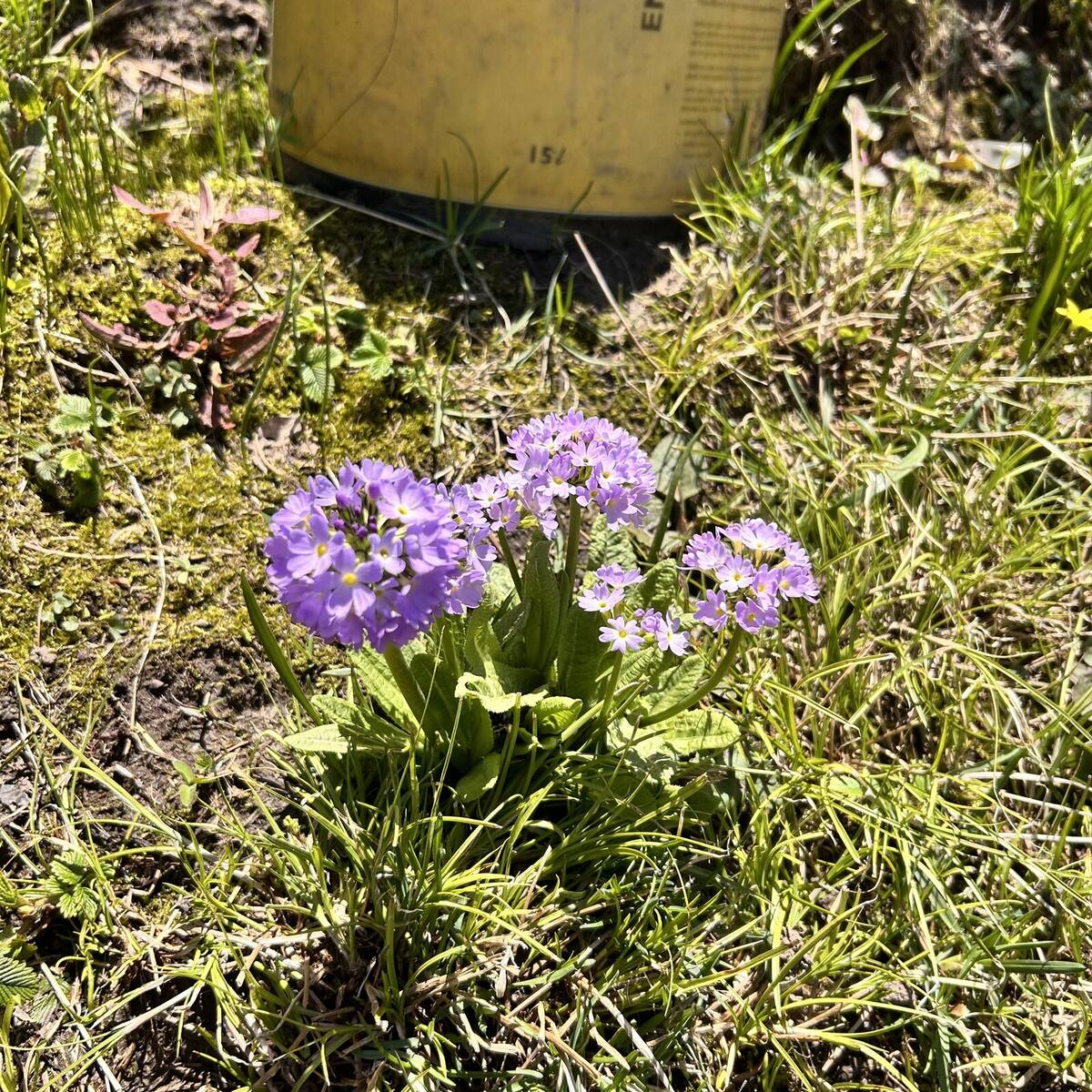
Alpine primula in flower in a Himachal meadow
Alpine biodiversity in mid-altitude meadows. SALM and wetland projects monetise the systems that already exist. / Author photography, April 2026
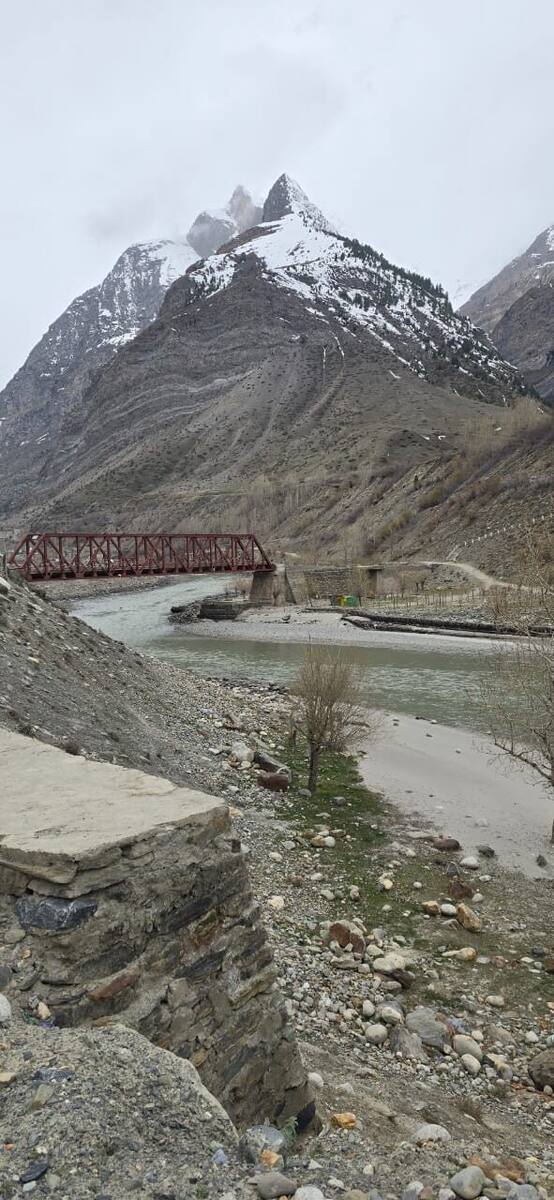
Lahaul valley with snow-fed river and snow-capped peak
Lahaul. Snow-fed perennial flow into the Chenab basin. Wetland protection upstream stabilises everything downstream. / Author photography, April 2026

The market opportunity, not the developer

India had 707 Verra-registered carbon projects at the time of writing, with the Verra agriculture portfolio covering 16.5 million hectares globally. HP's representation in this pipeline is materially below its addressable base. The bottleneck is not methodology, demand, or pricing. It is land-bank aggregation, baseline measurement, MRV (monitoring, reporting and verification) infrastructure and developer capacity in the Western Himalaya specifically.

For investors, the entry point is the aggregator gap, not any individual developer. A platform that can assemble 25,000 to 50,000 hectare contiguous land-banks across panchayat and forest department holdings, with verified baselines and standing MRV, is currently absent. India's Carbon Credit Trading Scheme (CCTS) operationalising in 2025-26 sharpens this opportunity by creating compliance-side demand for credits that meet domestic standards.

Part VII · The Adventure Economy
A second tourism economy, latent and stranded
Adventure tourism accounts for a small share of HP's tourism mix despite the topography. The opportunity is to grow it deliberately, decoupled from snow seasonality.
Read
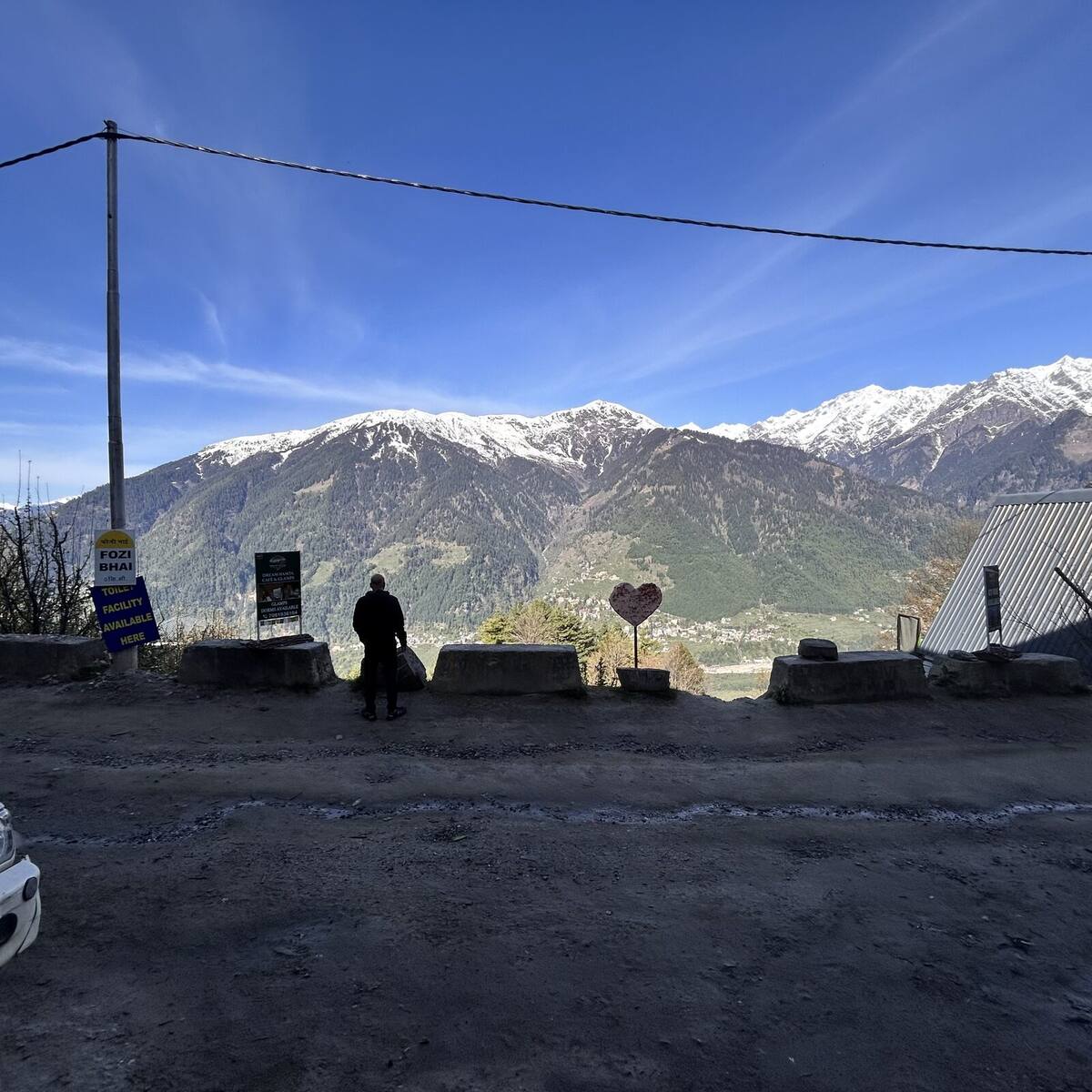
Manali valley vista with snow-capped peaks
Manali viewpoint. The state's adventure infrastructure is overwhelmingly anchored in 3-4 hub towns. The trail network behind them is largely informal. / Author photography, April 2026

The state's adventure tourism is overwhelmingly hub-anchored: 80% of activity concentrates in Manali, Solang, Bir-Billing and a handful of Kullu-Mandi corridors. The trail network behind the hubs is largely informal, with limited maintenance, weak rescue infrastructure, and almost no biodiversity-led product design.

Six climate-driven mechanisms are reshaping the adventure economy. Trail erosion from intense monsoons has shortened trekking windows. Glacier retreat has altered classic climbing routes. Lower snowpack has compressed ski seasons. Slope instability closes high passes earlier. Wildlife shifts are changing what guides can promise. Insurance availability is contracting for adventure operators in the state.

Restoration capital that builds trail infrastructure, replants riparian zones along trekking corridors, and underwrites professional rescue services creates a year-round adventure economy that is both adaptive (more resilient to single-season weather) and revenue-diversified for hill communities. This is parallel income to apple horticulture and snow tourism, not replacement.

Field Highlight · On the Ground

ProClime in Himachal Pradesh

A working example of the restoration thesis already in motion: state-backed industrial biochar paired with a 50,000-hectare afforestation programme covering more than 50,000 smallholder farmers.

ProClime - Himachal Pradesh project
Carbon developer profile · Himachal Pradesh

ProClime has established a multi-initiative presence in Himachal Pradesh, spanning India's first state-backed industrial biochar programme and a 50,000-hectare afforestation project committing USD 7 million for over 50,000 smallholder farmers. Together, these initiatives create rural livelihoods, sequester carbon, and establish HP as a model for community-led climate action in South Asia.

“This initiative reflects Himachal Pradesh's commitment to climate leadership rooted in grassroots participation.”
Sukhvinder Singh Sukhu  /  Chief Minister, Himachal Pradesh [1]

“Himachal's agricultural landscapes are critical to India's climate future. This project is our long-term commitment to the farmers of the region.”
Kavin Kumar Kandasamy  /  Founder & CEO, ProClime [2]

“For carbon removal to be meaningful, it has to work for both the climate and the communities closest to the land.”
Vijayakumar Rangaraju  /  Chief Mission Officer, ProClime [3]
Sources
[1] Government of Himachal Pradesh press release, 27 August 2025 - himachalpr.gov.in
[2] ProClime news, ARR project in Himachal Pradesh, 27 November 2025 - proclime.world
[3] ProClime news, Himachal CM launches India's first state-supported biochar programme, 27 August 2025 - proclime.world
Part VIII · Downstream Stakes

If Himachal degrades, who pays

A state that holds 0.53% of India's population sits upstream of five river systems that feed roughly half of India's irrigated grain production, plus Pakistan's Indus-basin agriculture. The cost of inaction does not stay in the hills.

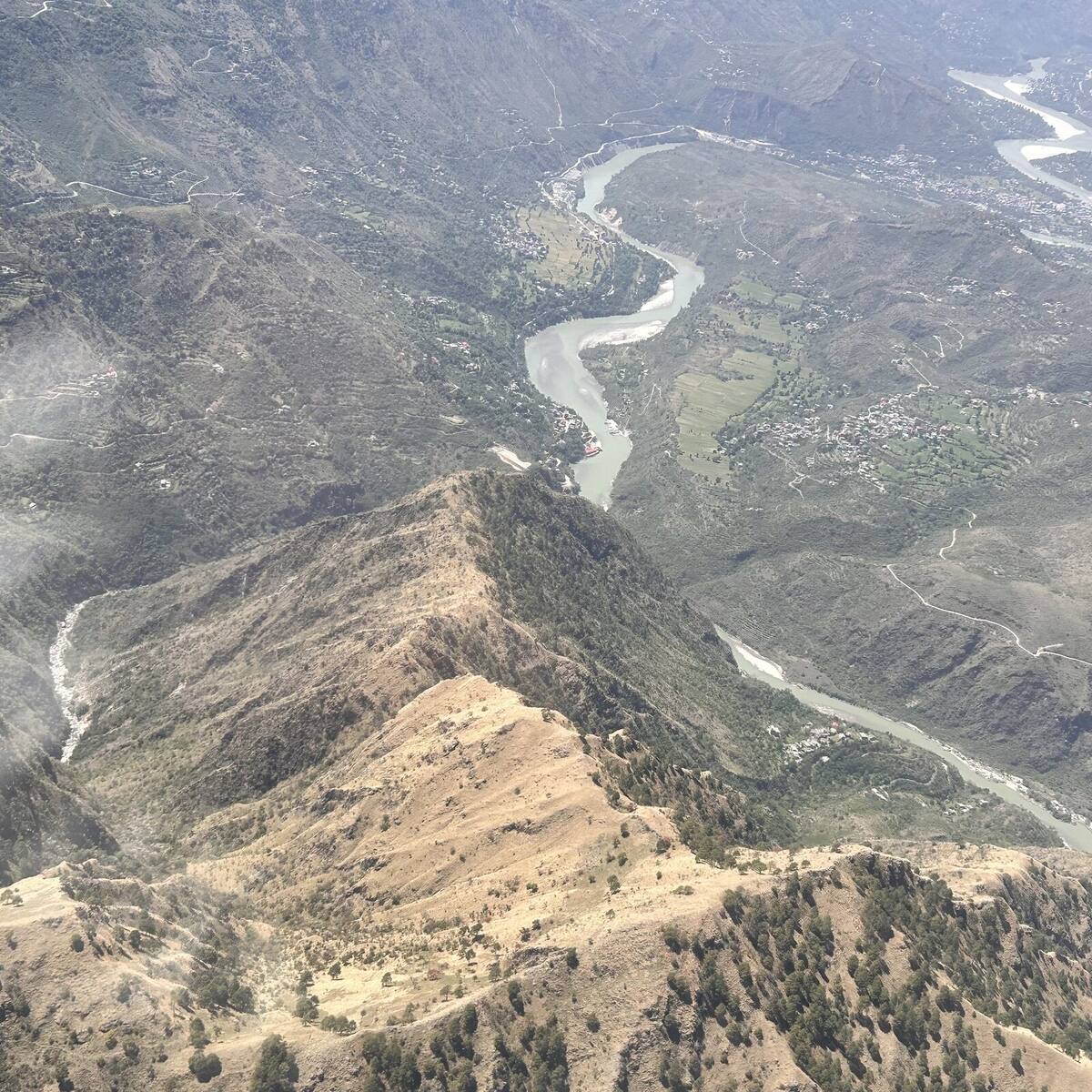
Sutlej river curves through gorge from aerial perspective
The Sutlej cuts through the Lower Himalaya. Downstream of this frame: Bhakra Dam, Pong reservoir, the Indira Gandhi Canal, and 16+ lakh hectares of irrigated land in Punjab, Haryana and Rajasthan. / Author photography, April 2026

The narrative that "Himachal Pradesh is small" misreads the geography. The state's five major river basins drain 53,311 sq km of its 55,673 sq km area, more than 95 percent. Ranked by HP catchment share: Sutlej (30.69%), Beas (24.50%), Chenab (14.2%), Ravi (9.9%) and Yamuna (0.67%). Four of these (Sutlej, Beas, Ravi, Chenab) feed the Indus system. The fifth (Yamuna) feeds the Ganga system. Together they service four downstream Indian states, two union territories, and the entire Indus basin agricultural economy of Pakistan. This is not a state-level climate exposure. It is a national infrastructure exposure routed through one state's terrain.

Downstream geography
What HP supplies
What is at risk if degradation continues
Punjab
Sutlej, Beas, Ravi basins
Bhakra Dam (1,325 MW + irrigation), Pong reservoir, Ranjit Sagar. Roughly 76 lakh hectares of cropped area dependent on assured monsoon-plus-canal flow.
Sediment loading reduces reservoir live storage. GLOF events damage downstream infrastructure. Erratic flow regimes disrupt the wheat-rice cropping cycle that underpins the PDS.
Haryana
Sutlej-Yamuna systems
Western Yamuna Canal, Bhakra Main Line. Drinking water for Faridabad, Gurugram and parts of NCR via inter-basin transfer. Significant share of cropping area canal-fed.
Reduced winter flow tightens already-stressed water-table. Inter-state water disputes with Punjab over Sutlej-Yamuna Link Canal sharpen.
Rajasthan
Indira Gandhi Canal
The Indira Gandhi Canal, fed from Pong and Bhakra, irrigates approximately 16.17 lakh hectares in Rajasthan's western desert districts. It is the principal reason Sri Ganganagar is wheat country.
Canal flow reductions translate directly into desert-margin agricultural losses. Compounds with Rajasthan's existing groundwater overdraw.
Delhi NCR
Yamuna headwaters
Drinking water and municipal supply via the Yamuna system. Power import from the Northern Grid that includes substantial HP hydro.
Lean-season water tightening intensifies summer crisis. Hydro dispatch volatility from HP affects grid balancing.
J&K + Pakistan
Chenab basin
The Chandra and Bhaga rivers meet at Tandi in Lahaul to form the Chenab. The river then flows into J&K and onward into Pakistan, where it is one of the three western rivers allocated to Pakistan under the Indus Waters Treaty (1960). Salal, Baglihar and Kishanganga downstream HEPs depend on its flow.
Lahaul-Spiti glacier dynamics directly affect Chenab firm flow. GLOF risk in the Chandra basin is a treaty-sensitive transboundary water issue, not just a domestic one.
Northern Grid
Inter-state power flows
HP's 10,519 MW of installed hydro feeds the Northern Region grid serving Punjab, Haryana, Rajasthan, Delhi, UP, J&K, Uttarakhand and Chandigarh.
Sediment, GLOF risk and lean-season flow variability reduces firm-power availability. Replacement firm capacity is fossil-fuel by default.
India NDC
Paris commitments
India's NDC includes a 500 GW non-fossil capacity target by 2030 and a 2.5-3 Gt CO2e additional carbon sink commitment. HP's forest carbon and hydro are central to both.
Loss of forest carbon stock and hydro firm capacity makes NDC compliance more expensive nationally. Restoration capital here is the cheapest unit of NDC delivery available.

This is the argument that converts an ESG conversation into a national infrastructure conversation. The Centre's calculus on releasing the Rs 9,000 crore PDNA assessment to HP looks different when the same capital is framed as protection for Punjab's wheat cycle and Rajasthan's canal water, not as a transfer to a small hill state.

Part IX · The Playbook

The 8-step playbook

Four asset-protection moves for portfolios with existing HP exposure. Four restoration-investment moves for capital entering the geography.

Asset protection · existing HP exposure
01
Reprice physical risk on hill real estate.
Shimla · Manali · Dharamshala · McLeodganj. Section 118 limits institutional REIT entry. Repricing target is HNI second-home portfolios.
02
Stress-test hydropower offtake with 15 to 20% firm-capacity haircut.
92.4% of installed hydro is centrally controlled. Underwrite anti-reallocation language alongside catchment-management contractual obligations.
03
Reassess apple horticulture portfolios against altitude bands.
Chilling-hour line migrating uphill at 50 to 100 m per decade. Lower-altitude orchards are stranded asset risk on a 10 to 15 year horizon.
04
Price logistics-disruption risk into BBN pharma site contracts.
2023 monsoon cost operators 5 to 15 dispatch days. Force-majeure language should now reflect recurring road-closure exposure.
Restoration investment · new HP capital
05
Anchor the aggregator gap in carbon project structuring.
25,000 to 50,000 hectare contiguous land-banks across panchayat, private, forest department holdings. Platform infrastructure, not project-by-project.
06
Pumped storage co-investment via HPPCL JV structures.
1,630 MW Renukaji and 270 MW Thana Plaun PSPs allotted to HPPCL in 2024. AFD already in. Open window for additional DFI co-financing.
07
Wetland restoration as the premium credit asset class.
USD 25 to 45 per tCO2e on voluntary markets. Anchor sites: Pong, Renuka, Khajjiar, Chandratal. Wetlands under HP High Court Amicus Curiae oversight (M.K. Balakrishnan, 2017).
08
Year-round adventure infrastructure as community-anchored capex.
Trail network, professional rescue, biodiversity-led product design. Decoupled from snow seasonality and apple cycles.

A restoration economy is the only one that prices everything

Himachal Pradesh's climate exposure is not a regional story. It is the upstream infrastructure exposure of a country whose grain belt, hydropower base, NDC pathway and Indus Waters Treaty obligations all route through one mountain state.

The state cannot lobby its way to a fix. It does not have the parliamentary weight. It has to be capitalised into a fix. The methodology rails (ARR, AFOLU, wetlands, SALM) are operational. The compliance demand (CCTS) is arriving in 2025-26. The pumped storage projects are already allotted to HPPCL. What is missing is the aggregator infrastructure that connects available capital to Himachal's specific geography at scale.

This brief is addressed to the Green Climate Fund, the World Bank, the Asian Development Bank, the Asian Infrastructure Investment Bank, AFD, KfW, the Climate Investment Funds, and the sovereign and pension capital that benchmarks against UN PRI standards. The asset class is restoration capital with verified mitigation co-benefits. The pricing window is open through India's CCTS rollout in 2025-26. The political risk is a state government actively seeking partners. The downstream beneficiary class extends across India's grain belt and into Pakistan's Indus basin command, making this multilateral by definition, not by classification.

The Centre will eventually release the Rs 9,000 crore PDNA assessment. The state government will eventually expand its EV infrastructure. The northern grid will eventually price firm-capacity haircuts on Himachal hydro. None of these on their own resolves the trajectory. Private and multilateral restoration capital, structured for dual yield, deployed at scale, can.

This is infrastructure investment in the most leveraged geography India has. Not philanthropy. Not ESG box-ticking. Not concessional grant. Investment, with a measurable return profile across carbon credits, water security, and downstream productivity preservation. The geography will not wait for the conventional capital cycle to discover it.
Bombay Breed Consulting / The Climate Desk / April 2026
Sources, ordered by section
Demographics: Census of India 2011 (HP population 6,864,602); National Commission on Population, Technical Group projection 2025 (75.55 lakh). Hydropower: HP Power Corporation Limited (HPPCL); Wikipedia / IndiaWRIS verified figures. 27,436 MW total potential, 24,000 MW harnessable, 10,519 MW commissioned as of 2024-25. Forests & carbon stock: Forest Survey of India (FSI), India State of Forest Report (ISFR) 2023. Forest cover 15,433.52 sq km (27.72% of state), recorded forest area 37,033 sq km, carbon stock 252.36 Mt (925.32 Mt CO2e). Geographical area: FSI ISFR 2019/2023, 55,673 sq km, 1.69% of India. Parliamentary representation: Election Commission of India; Parliament of India official rolls. 4 Lok Sabha (Mandi, Hamirpur, Kangra, Shimla); 3 Rajya Sabha. Disaster losses: HP State Emergency Operation Centre, Department of Revenue. Annual Memorandum of Damages 2021-2025. NDMA Post-Disaster Needs Assessment 2023 (Rs 9,000 cr). Supreme Court observation: Supreme Court of India, oral observations during 2025 monsoon hearing. Reported in Down To Earth and Mongabay India. Snow persistence: ICIMOD Hindu Kush Himalaya Snow Update 2025. 23-year low at 23.6% below normal. Glacial lakes: ISRO National Remote Sensing Centre Sentinel-2 inventory 2019, 2023. Sutlej basin: 562 to 1,048 lakes. Tourism: HP Tourism Department; HP Economic Survey. 1.80 cr arrivals 2024; 7-7.5% of GSDP. GSDP: India Brand Equity Foundation (IBEF) state report. FY26 estimate Rs 2.55T, 8.36% CAGR. Pharma cluster: Industry estimates for BBN belt's share of Asian pharma manufacturing capacity. Electricity consumption: Central Electricity Authority (CEA), Resource Adequacy Report. HP consumption 11,354 GWh FY24; contracted capacity 2,381 MW (93.3% non-fossil). EV ecosystem: HP Transport Department; Ministry of Heavy Industries data. 4,997 EVs registered (April 2025); 402 charging stations sanctioned. HRTC e-bus order: 297 vehicles, around Rs 424 cr. HP river systems: Five major basins (Sutlej, Beas, Ravi, Chenab, Yamuna) draining 53,311 sq km. Catchment shares (Sutlej 30.69%, Beas 24.50%, Chenab 14.2%, Ravi 9.9%, Yamuna 0.67%) per HP State drainage records and IndiaWRIS. Sutlej basin operations: Bhakra Beas Management Board (BBMB). Indus Waters Treaty: 1960 treaty between India and Pakistan, brokered by World Bank. Allocates Chenab, Jhelum and Indus to Pakistan; Ravi, Beas and Sutlej to India. Indira Gandhi Canal command: Government of Rajasthan, Water Resources Department. 16.17 lakh hectares. Carbon credit pricing: Verra public registry; Ecosystem Marketplace State of the Voluntary Carbon Markets 2024 report ranges. Restoration methodologies: Verra VM0047 (ARR), VM0033 & VM0036 (Wetlands), VM0042 & VM0017 (SALM); Gold Standard Land Use & Forests requirements. India CCTS notification, Ministry of Environment, Forest and Climate Change. India Verra portfolio: Verra public registry, India-registered project count and Verra agriculture portfolio scale. India NDC: Updated NDC submission to UNFCCC, August 2022. 500 GW non-fossil by 2030; 2.5-3 Gt CO2e additional sink. Photography: All Himachal Pradesh photographs by the author, recce visit April 14 to 20, 2026. Prior TCD research: HP Produce Map; HP Crop Hardiness; Compounding Losses; Vanishing Winter. Bombay Breed Consulting / The Climate Desk.